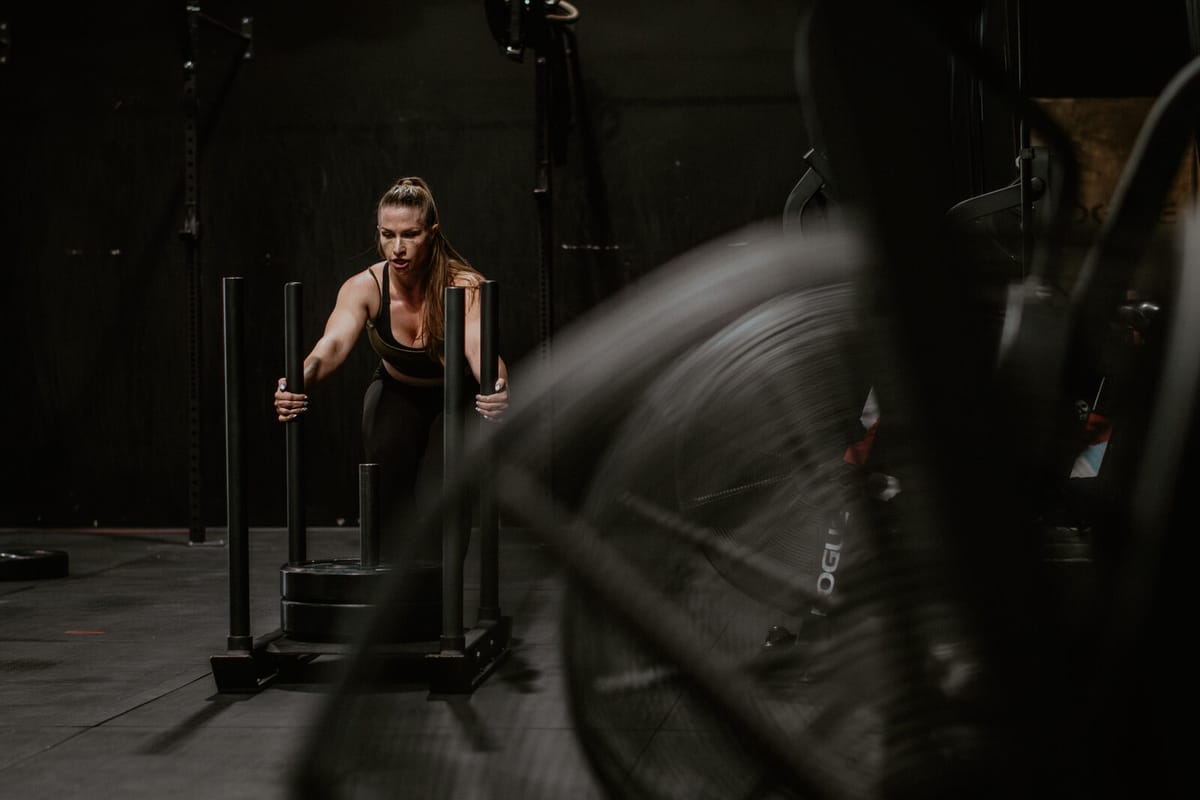
August is the month Las Vegas lifters lose the most training days. Highs sit above 100 degrees for weeks at a stretch, the overnight low barely drops out of the 80s, and the parking lot walk from your car to the gym door is enough to leave you flat before the first warm-up set. You do not have to shut the block down. You have to change the dose.
Here is how I coach clients across Las Vegas and Henderson through the back half of summer without losing the strength they spent the spring building.
Why does strength training feel so much harder in Las Vegas in August?
Heat raises your heart rate at the same workload, so a set that felt like a 7 out of 10 in April feels like a 9 in August without the barbell getting any heavier. Your body is sending blood to the skin to shed heat instead of to the working muscle, which means less oxygen delivery per rep and a slower return to baseline between sets.
Two more things stack on top of that in the Mojave. Desert air is dry, so sweat evaporates instantly and you never see how much fluid you actually lost. And the overnight low staying in the 80s means you wake up already down on fluid rather than starting the day even. That combination is why lifters here describe August as feeling weak rather than feeling hot.
Should you cut training volume when it is 110 degrees outside?
Cut density before you cut load. The fastest fix is longer rest between sets, not lighter bars. Going from 2 minutes to 3 or 4 minutes between heavy squat or press sets gives your heart rate time to come back down, and most people can hold their normal working weights that way through the whole month.
If a full recovery interval still is not enough, drop total sets by roughly a quarter and hold the intensity. A 4x5 becomes 3x5 at the same load. You keep the strength stimulus and shed the accumulated fatigue that heat is already charging you for. Reversing that order, keeping the set count and shaving 20 pounds off the bar, is what actually costs you strength by September.
How much water and sodium do you really need to train in Las Vegas heat?
Water alone is not enough in a dry climate, because you are losing sodium in sweat and replacing it with plain water dilutes what is left. Practical version: add electrolytes to at least one bottle on training days, salt your food normally instead of avoiding it, and start drinking two hours before the session rather than trying to catch up during it.
- Before: 16 to 20 ounces with electrolytes, roughly 90 minutes to 2 hours out.
- During: sip steadily rather than chugging between sets. A bottle you finish over the session beats one you drain in the first 10 minutes.
- After: weigh yourself before and after a hard session for one week. Every pound lost is roughly 16 ounces of fluid you did not replace, and it tells you exactly how much you personally sweat here.
That last one is the only measurement I ask summer clients for. It turns hydration from a guess into a number specific to you.
What is the best time of day to train in Las Vegas in August?
Early morning, before roughly 8 a.m., is the only window where the ambient temperature is meaningfully lower and your car has not been sitting in the sun. Evening feels cooler on the calendar but the asphalt and building mass have been absorbing heat all day, so a 7 p.m. session in a partly open gym is often warmer than a 7 a.m. one.
If mornings do not fit your schedule, that is a programming problem, not a character problem. A conditioned indoor gym at 6 p.m. beats a heroic 6 a.m. session you skip four times out of five. Consistency is the variable that decides August, and I build the schedule around the hours you will actually show up.
How should you adjust conditioning compared to barbell work?
Conditioning takes the bigger cut, because that is where heat and effort compound fastest. Sled pushes, carries, and bike intervals all raise core temperature quickly and clear it slowly, so an August conditioning piece should be shorter, with a longer work-to-rest ratio than the same piece in January.
Barbell strength work holds up much better. Heavy triples with real rest are largely a neural demand, not a metabolic one, so a heat-adjusted week often looks like the same squats and pulls paired with half the conditioning volume. If something has to come out of the week, take it out of the finisher before you take it out of the main lift.
Does the heat change Olympic weightlifting technique?
Yes, and it shows up first in the second pull and the catch. Fatigue from heat degrades speed under the bar before it degrades your ability to grind a slow lift, so a snatch or clean will start missing forward or getting caught high while your squat numbers look untouched.
The coaching fix is to move technical work to the front of the session and end it on a rep quality standard rather than a set count. When bar speed drops, that is the signal to stop the lift for the day, regardless of what the program said. In August I would rather a lifter bank six clean singles than grind through 10 and rehearse a bad catch position eight times.
What are the warning signs you should stop a session?
Stop the session if you stop sweating, get chills, feel dizzy or nauseated, or get a headache that started during training. Those are heat illness signs, not toughness tests, and the response is shade, fluid, and ending the day, not one more set.
Milder tells that the day should be shortened rather than stopped: your heart rate not settling during rest periods, a warm-up set feeling like a working set, or your grip going before your legs do. Any of those and you move to the top of the plan, hit the main lift, and skip the accessory work.
How do you set up now for a strong fall?
Treat August as a maintenance block and put your building block in September. Strength maintains on far less volume than it takes to build, so holding your squat and press through the heat with reduced sets is a win, not a plateau. The lifters who show up in October with a personal record are the ones who protected consistency in August instead of chasing progress in it.
Practically, that means: keep the main lifts, extend rest, trim conditioning, train in the coolest window you will actually keep, and hydrate with sodium instead of water alone. Then write the real progression block for the last week of September, when Las Vegas nights finally drop back into the 60s and your training capacity comes back on its own.
Want a program built for a Las Vegas summer?
Built Thru It Performance coaches strength, performance, and Olympic weightlifting across Las Vegas and Henderson, in person, at home, or fully online. Every program is built from your assessment, your equipment, and the schedule you can actually keep, then adjusted week to week — including for a month like this one.
See how strength and performance coaching works, or apply for coaching and we will build the fall block together.