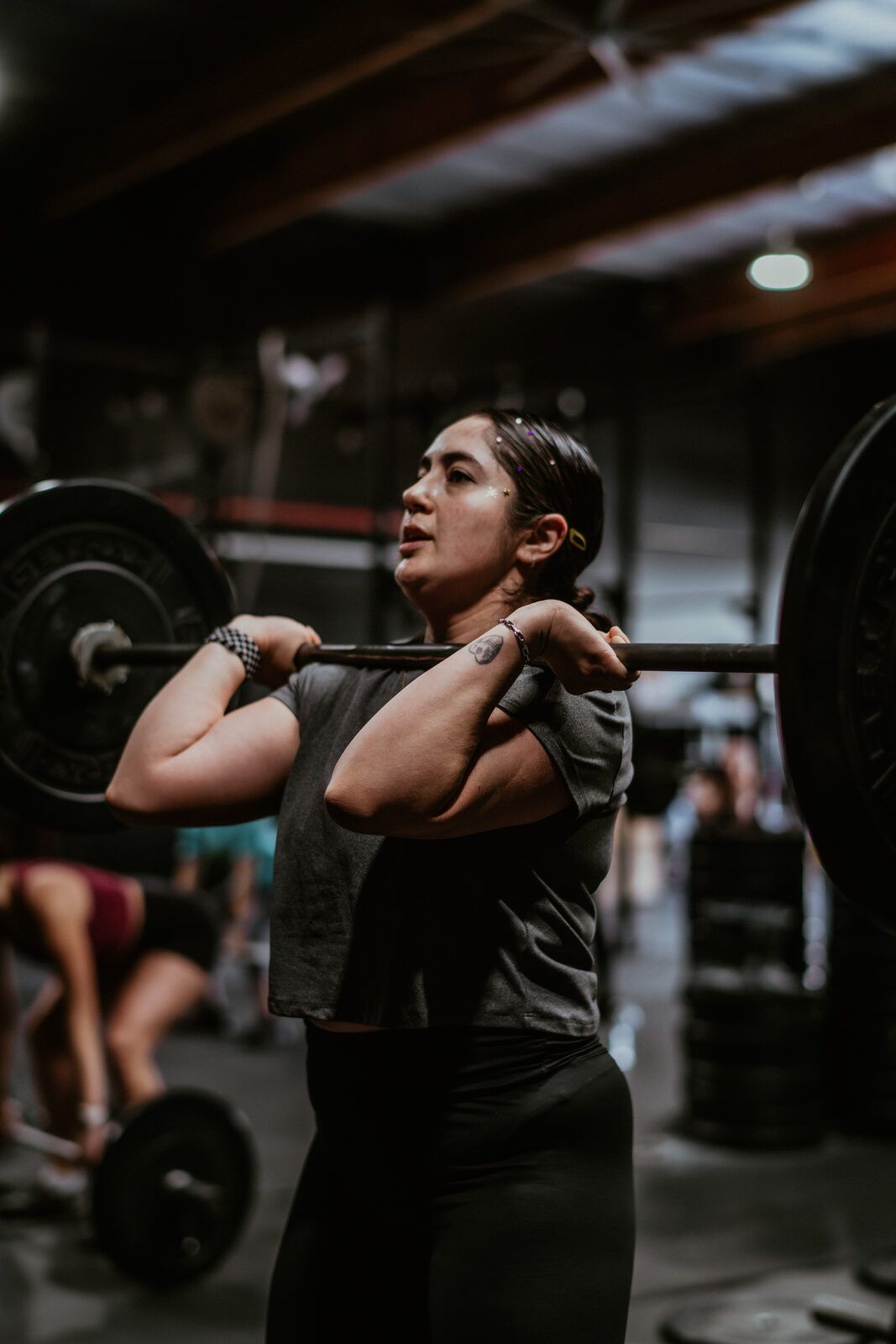
Most local weightlifting meets in Nevada run through the fall and winter, which makes late August the last comfortable moment to decide you are competing this year. Twelve weeks is the shortest honest runway for a first meet. If you start now, you get a full strength block, a technical block, and a taper before you ever step on the platform.
Here is what the process actually looks like, from the rulebook to the last warm-up single behind the platform.
What actually happens at a USAW weightlifting meet?
You get three attempts at the snatch and three attempts at the clean and jerk, and your best successful lift in each counts toward your total. That total, not any single lift, determines placing within your bodyweight class and age group.
The order of the day is fixed. Weigh-ins open two hours before your session starts and close one hour before. You declare your opening attempts at weigh-in. The snatch runs first for the whole session, then a short break, then the clean and jerk. Attempts go in ascending bar-weight order, so you do not control exactly when you lift. You track the bar and time your warm-ups to it.
Three white lights from the referees means the lift counts. Two or three red lights means it does not, and you either repeat that weight or move up. You have one minute to start your lift once your name is called, and two minutes if you follow yourself.
How far out should you start preparing for your first meet?
Twelve weeks is the working minimum, and sixteen is more comfortable for a first-timer. The reason is that a first meet asks two different things of you at once: you need the strength to hit a respectable total, and you need enough repetitions under competition conditions that the platform does not feel foreign.
A rough split of a twelve-week runway looks like this:
- Weeks 12 to 7: general strength. Squats, pulls, presses, and volume in the classic lifts at submaximal loads. This is where the total gets built.
- Weeks 6 to 3: technical density. Heavier singles in the snatch and clean and jerk, less accessory volume, and at least two mock sessions run on a real clock.
- Weeks 2 to 1: taper. Volume drops sharply, intensity stays. You are rehearsing openers, not chasing personal records.
What does meet prep training look like in the final six weeks?
The last six weeks stop being about building strength and start being about making the strength repeatable on command. That changes the session structure more than it changes the exercises.
Practically, that means singles replace sets of three, accessory work gets cut roughly in half so recovery goes to the classic lifts, and at least twice you run a full simulation: weigh yourself, wait, warm up on a timer, and take six attempts in competition order. A lifter who has done that twice is not surprised by anything on meet day except the crowd.
It also means the last true heavy day sits about ten days out. Anything heavier after that borrows from meet day rather than adding to it.
How do you pick your opening attempts?
Open at a weight you could hit on your worst training day, which for most first-time lifters lands around 85 to 90 percent of your best training single. The purpose of the opener is to put a number on the board, not to impress anyone.
The math behind that is simple. Bombing out means missing all three attempts in a lift, and a lifter who bombs out the snatch has no total no matter how well the clean and jerk goes. A conservative opener converts the day from a gamble into a build. From there the second attempt is usually a small jump of 3 to 5 kilos, and the third is where you go after a personal record.
Openers get declared at weigh-in and can be changed twice before the bar is loaded, so the plan has room in it. Most first-timers who regret an opener chose it the morning of instead of rehearsing it during the taper.
What do you need to bring on meet day?
- A current USAW membership. It has to be active on the day, and registration for most local meets requires it up front.
- A singlet. Required for competition. A t-shirt underneath is allowed.
- Weightlifting shoes, belt, wrist wraps, and tape. Knee sleeves are allowed within length limits. Straps are not allowed on the platform.
- Food you have already trained on. There can be two hours between weigh-in and your first snatch, and another 30 to 45 minutes before the clean and jerk starts.
- Your attempt sheet. Openers and planned jumps written down, so nobody is doing arithmetic at the warm-up platform.
One Las Vegas detail worth planning for is temperature. Venues here run cold air conditioning against a hot parking lot, so you cool down between attempts faster than you expect. Sweats between lifts are not optional in a Nevada meet hall.
Do you need a coach to compete, or can you do this alone?
You can enter a meet without a coach, but somebody has to run your warm-ups against the bar, and that job is close to impossible to do for yourself. Attempt order shifts constantly as other lifters change their declarations, and the person tracking that has to be watching the board, not chalking their hands.
A coach does three concrete things on meet day: times your warm-up singles so your last one lands one to two attempts before your name, decides your second and third attempts based on how the first one moved rather than on the plan you wrote a week ago, and handles the declaration card so you never miss a change deadline. That is the difference between six attempts and six attempts that build on each other.
How do you start meet prep in Las Vegas or Henderson?
Built Thru It Performance coaches Olympic weightlifting for lifters across Las Vegas and Henderson, from a first local meet through national-level preparation. Alexa competes on the USAW platform herself, so the meet-day process being described here is the one she runs.
Two ways in, depending on how much structure you want:
- 1:1 Training Only gives you a full programmed block written around your schedule, your gym, and your meet date, with weekly check-ins and video review.
- A 1-Time Strategy Plan is a single call plus a written plan. If you already have a program you like and want expert eyes on your peaking block and attempt selection, this is the smaller commitment.
If your meet is in the fall, the block starts now. Apply for coaching or read more about Olympic weightlifting coaching in Las Vegas and bring your current bests in the snatch, clean and jerk, and back squat.